

Traveled into the Indian subcontinent from Central Asia and Persia between the 13th and 14th centuries — the Persian sanbosag is documented in 10th-century court records of the Abbasid caliphate, and Ibn Battuta described eating one (called sanbusak) at Muhammad bin Tughluq's Delhi court in 1334. The Indian version eventually swapped the original meat filling for spiced potato as the dish moved into vegetarian street-food territory.
Central Asian sambusa traveled to India with 13th-century Delhi Sultanate cooks. The pastry must be stretched and rested twice — the lamination, not just the filling, is what separates a great samosa from a mediocre one.
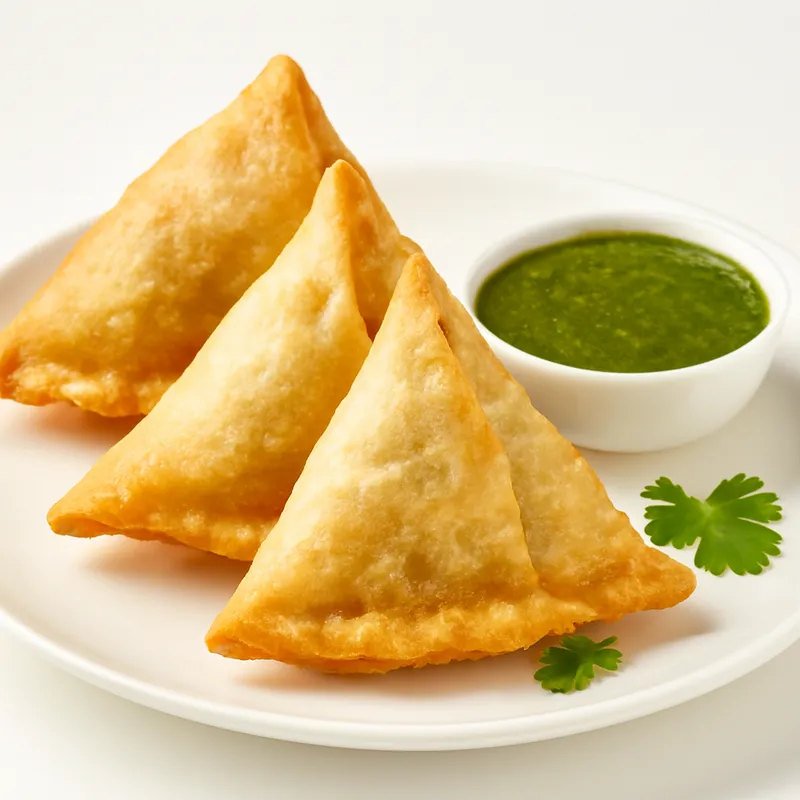
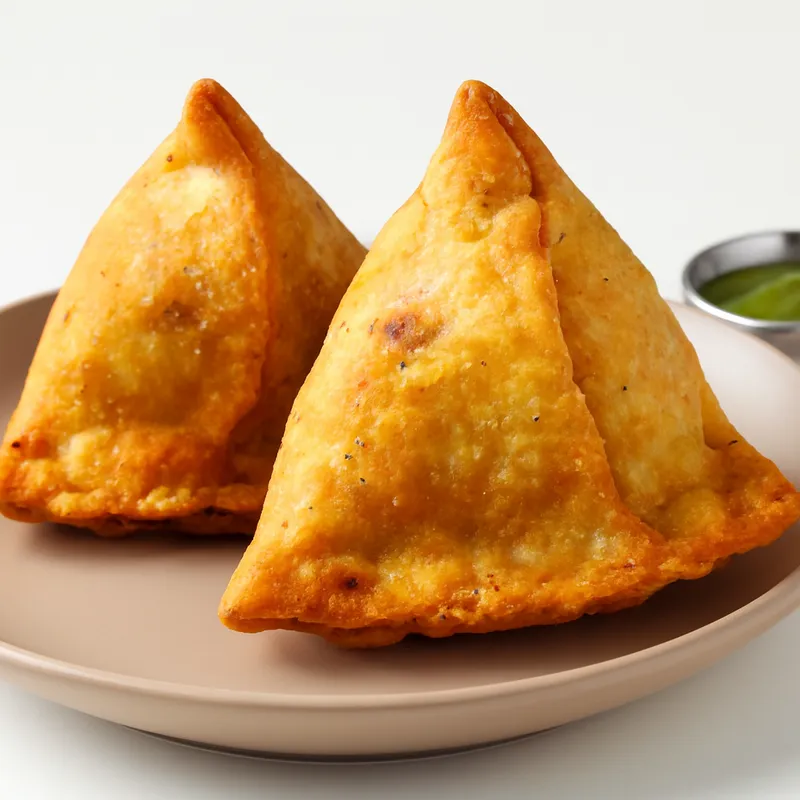
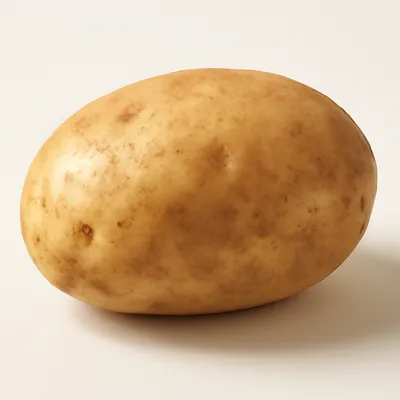
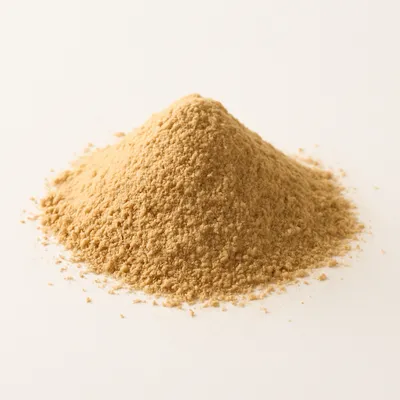
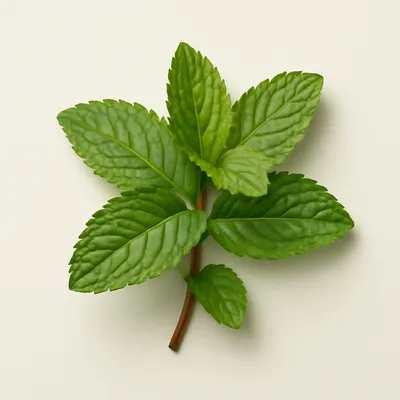
A heavy, palm-sized triangle with a thick crust that shatters along the seam. Inside: a dry crumble of potato, peas, ginger, green chili, cumin, and a faint sour edge from amchur (dried mango powder). Eaten dipped in tamarind chutney or mint-coriander chutney, sometimes both. The pastry should snap, not bend; if it folds when you press it, the dough was rolled too thin or fried at too low a temperature.
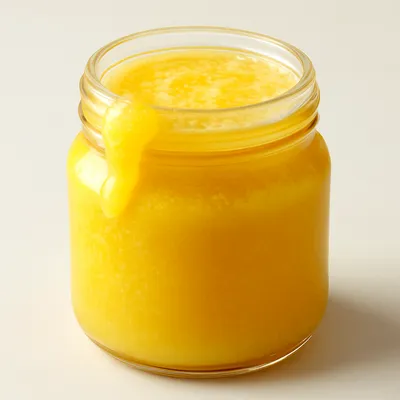
The crust uses maida (refined wheat) with a high ratio of fat (ghee or oil) worked in until the dough resembles wet sand — this is moyan, the technique that gives samosa its characteristic blistered, flaky shell. Frying happens in two stages: first at 130–140°C until the pastry sets and barely colors, then at 180°C to crisp and brown. Single-stage high-heat frying gives a tough, oil-soaked shell.
Variations
Punjabi (potato + peas, the canonical North Indian); Hyderabadi (lamb + spices, Lucknowi-influenced); Bengali shingara (with peanuts and coconut); Burmese samuza (smaller, with pork); Levantine sambousek is the Lebanese cousin.
On the Palate
Where Samosa sits in the Indian flavor cloud
Fry in two stages — 130–140°C to set and barely color the pastry, then 180°C to crisp and brown — because single high-heat frying gives a tough, oil-soaked shell.
Ingredients






How it's made
5 steps · 47 min
- 112 min
Boil the potatoes until tender, about 10 minutes. Drain and let them cool slightly before peeling and mashing them with a fork.
Watch outEnsure potatoes are fork-tender; undercooked potatoes won't mash smoothly.
- 26 min
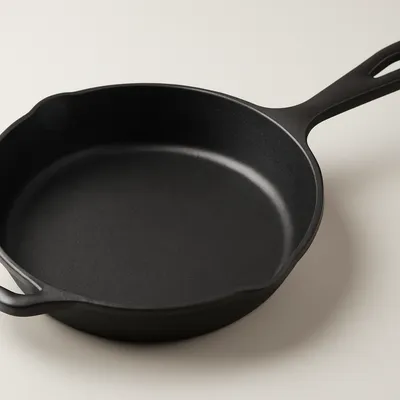
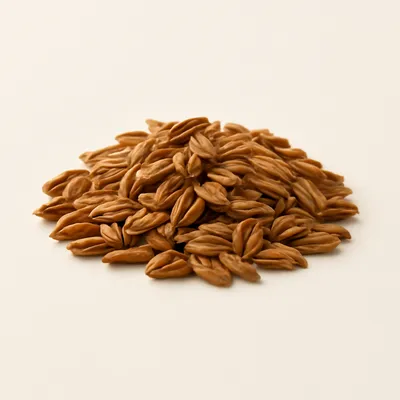
In a skillet, melt ghee over medium heat. Add cumin seeds and let them sizzle until fragrant, about 1 minute. Stir in chopped onions, peas, and ginger, cooking until the onions are soft, about 5 minutes.
Watch outCumin seeds are ready when they sizzle and turn fragrant and a shade darker — pull them before they blacken and go bitter.
- 34 min
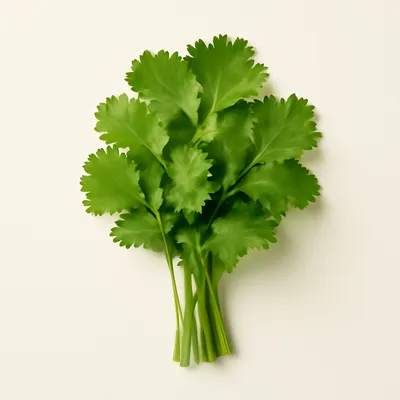
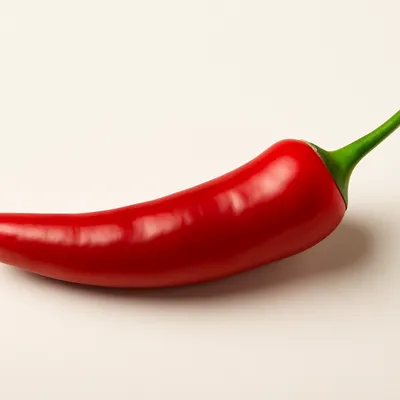
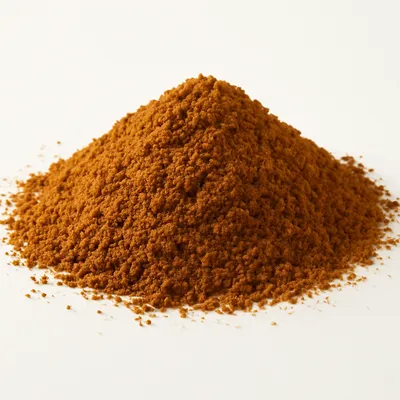
Mix mashed potatoes with the cooked onion mixture, adding cilantro, chili pepper, and spices. Cook for another 3 minutes, stirring well to combine flavors.
- 410 min
Roll out the dough and cut into circles or triangles. Place a spoonful of filling in the center, fold, and seal edges with a bit of water.
- 515 min
Heat oil in a deep pan until it reaches 350°F (175°C). Fry the samosas in batches until golden brown and crisp, about 3-4 minutes per side.
Watch outThe oil is at 175°C when a scrap of dough rises steadily with fine bubbles; the samosa is done when golden and crisp all over.
Archive tool suggestions — not reviewed
These legacy suggestions have not been evidence-reviewed and are not presented as required tools.