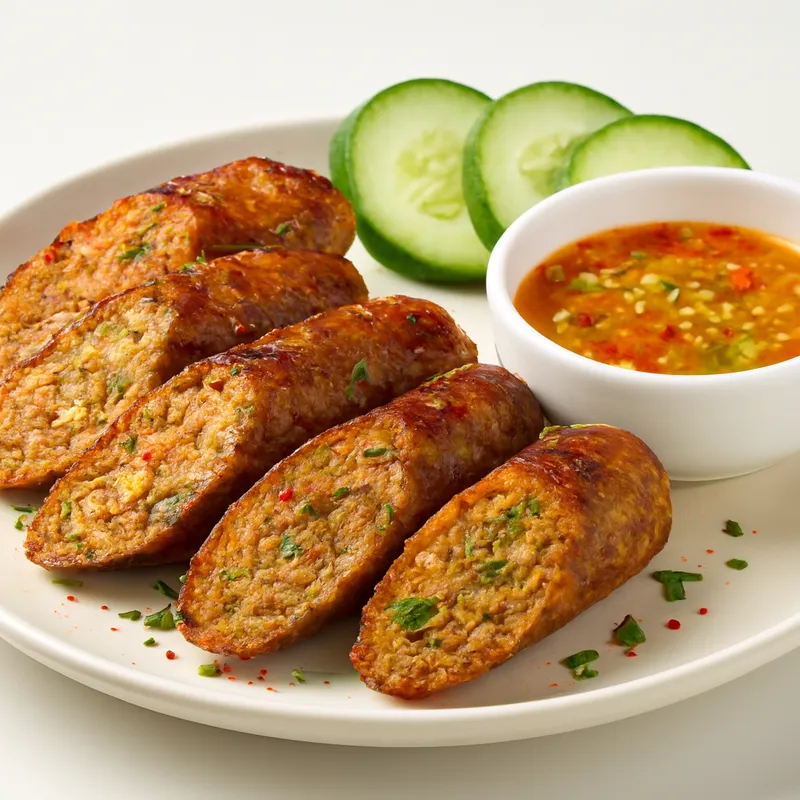
Whole salt-crusted river fish — usually tilapia or snakehead — stuffed with lemongrass and kaffir lime leaf, grilled over charcoal, served with sticky rice and seafood dip.
Pla pao is the signature whole-grilled fish of the Thai-Lao Mekong border region — Nong Khai, Mukdahan, Ubon Ratchathani on the Thai side, Vientiane and Savannakhet on the Lao side. Freshwater tilapia (pla nin) and snakehead (pla chon) are the standard fish. The salt-crust technique exists in many cuisines (Cantonese, French, Sicilian) but the Isaan-Lao version distinguishes itself with the lemongrass-and-kaffir-lime stuffing and the obligatory sticky rice and nam jim seafood pairing. Sold by the river at floating-restaurant villages and at every roadside grill in the region.
Mekong-border whole-grilled fish — Nong Khai, Mukdahan, Vientiane. Tilapia or snakehead, stuffed with lemongrass and kaffir lime, sealed in a salt-rice-flour crust and grilled 40 minutes. The crust seasons by osmosis through the skin without ever touching flesh.
Crack the chalky white shell at the table and steam billows out — lemongrass and kaffir lime leaf, the cavity perfumed by 40 minutes of slow grilling. The skin pulls back in one sheet. Flesh is impossibly white, flaky, lightly salted from the crust without ever touching brine — only osmotic seasoning. Pinch a piece, dip in the green-chile seafood sauce, wrap in cabbage with sticky rice, eat. If the flesh tastes flat, the salt crust was too thin or cracked early; if it's chewy and over-salted, the fish was small for the crust thickness.
The salt crust does two things at once. It conducts heat slowly and evenly so the fish steam-bakes from inside out — head and tail finish at the same time as the centre, no overcooked thin parts. It also seasons by osmosis through the skin without ever touching the flesh; the result is uniformly seasoned but never briny. Rice flour in the salt mix is the binder — without it, pure salt slumps off as it dehydrates. The aromatics in the cavity work on a single physics principle: 40 minutes of trapped steam carries lemongrass-and-lime-leaf oils into every fibre.
Variations
Pla nin pao (Nile tilapia, most common); pla chon pao (snakehead, prized for cleaner flake); Vientiane riverside grills sometimes use pla buek (Mekong giant catfish); modern Bangkok seafood places (Lay Lao, Somtum Der) plate it with three dipping sauces.
On the Palate
Where Pla Pao sits in the Thai flavor cloud
Ingredients
Serves 4






How it's made
6 steps · 20 min active + 40 min waiting
- 18 min
Scale and gut a whole 800g-1kg tilapia or snakehead. Do not remove the head, tail, or fins. Rinse, pat dry. The skin must be completely dry — wet skin makes the salt crust slough off.
Watch outPat the skin bone-dry before the salt goes on — any damp and the crust won't grip; it slides off in sheets as the fish heats.
- 25 min
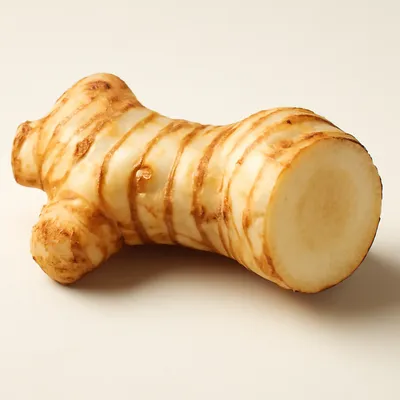
Bruise 4 stalks lemongrass with the back of a knife — split lengthwise. Tear 8 kaffir lime leaves. Stuff the cavity tight: lemongrass, lime leaves, 4 smashed garlic cloves, 1 sliced galangal knob. Skewer cavity closed with a bamboo stick.
- 36 min
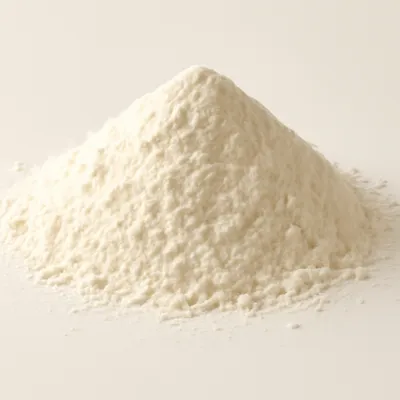
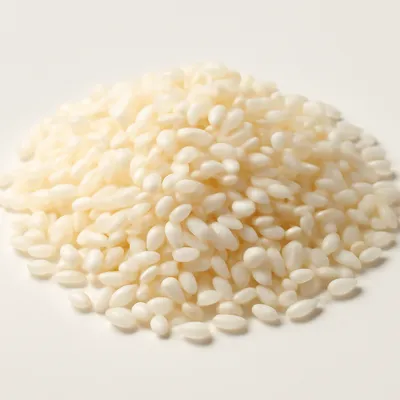
Mix 200g coarse sea salt with 4 tbsp rice flour and just enough water to form a thick paste — like wet sand. Pack the paste evenly all over the fish, 5mm thick, leaving the eye exposed. Pat firm.
Watch outPack the salt-and-rice-flour paste like wet sand, an even finger-thick layer all over — too wet or too thin and it slumps off as it dries instead of hardening into a shell.
- 435 min
Build a moderate charcoal bed — coals dusted grey, not white-hot. Skewer the fish lengthwise on a long bamboo split or place on a hinged grill. Grill 18-20 minutes per side over indirect-medium heat — the salt crust hardens and turns chalky white.
Watch outEnsure coals are not too hot to prevent burning the salt crust.
- 56 min
Test by inserting a chopstick at the thickest part — it should slide in with no resistance and come out clean. Rest the fish 4 minutes off the grill. Crack and lift away the salt crust at the table; pull skin back; the flesh underneath is white, steamy, lightly salted by the crust alone.
Watch outSlide a chopstick into the thickest part — it should go in with no resistance and come out clean; the chalky-white hardened crust is your other tell it's done.
- 63 min
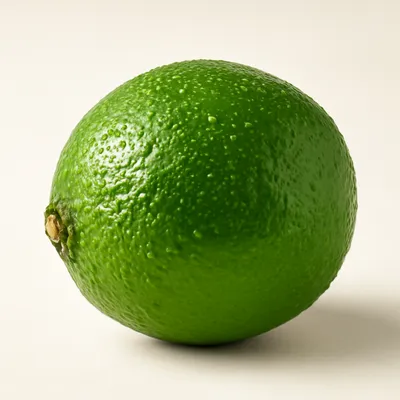
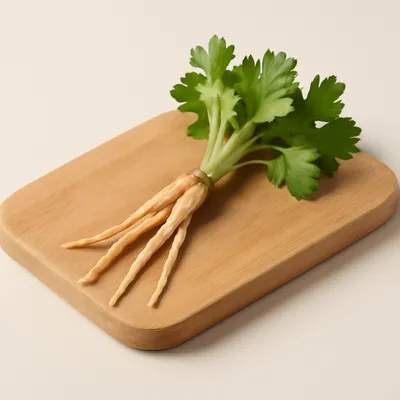
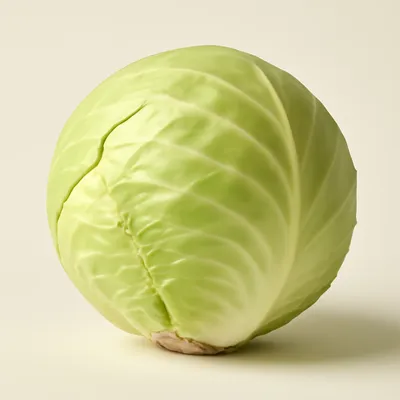
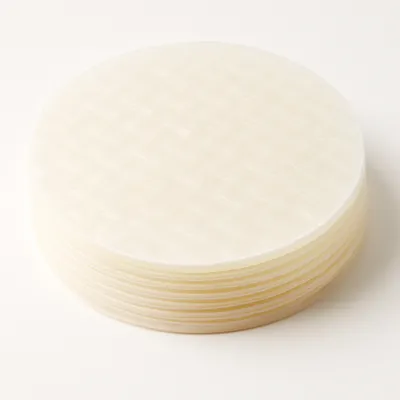
Serve whole on a platter with sticky rice in a bamboo basket, a bowl of nam jim seafood (lime, fish sauce, garlic, green chile, cilantro root), raw cabbage wedges, and rice-paper rolls if making roll-ups Lao-border style.
Archive tool suggestions — not reviewed
These legacy suggestions have not been evidence-reviewed and are not presented as required tools.

Stacked bamboo baskets, 20-30 cm across, with woven lattice bottoms and a domed lid. Set over boiling water in a wok, the bamboo absorbs excess condensation so droplets never fall back onto the food — that's why xiaolongbao stay glossy and dumplings don't go soggy. Multiple tiers let dim-sum kitchens steam four or five different items in one stack on the same flame.
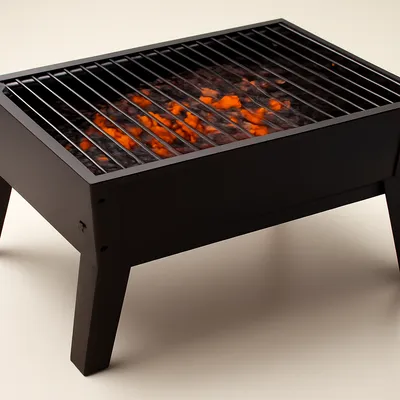
An open or hooded metal frame holding a bed of glowing charcoal embers, with a grate above. Charcoal burns at 700°C+ on the surface and emits short-wave infrared, which cooks proteins faster and with deeper Maillard browning than gas. Hardwood lump charcoal (oak, mesquite, fruitwood) lends its own smoke; cheap briquettes do not. Mastery is mostly heat zoning — direct over coals for searing, indirect off-coals for slow-roasting.