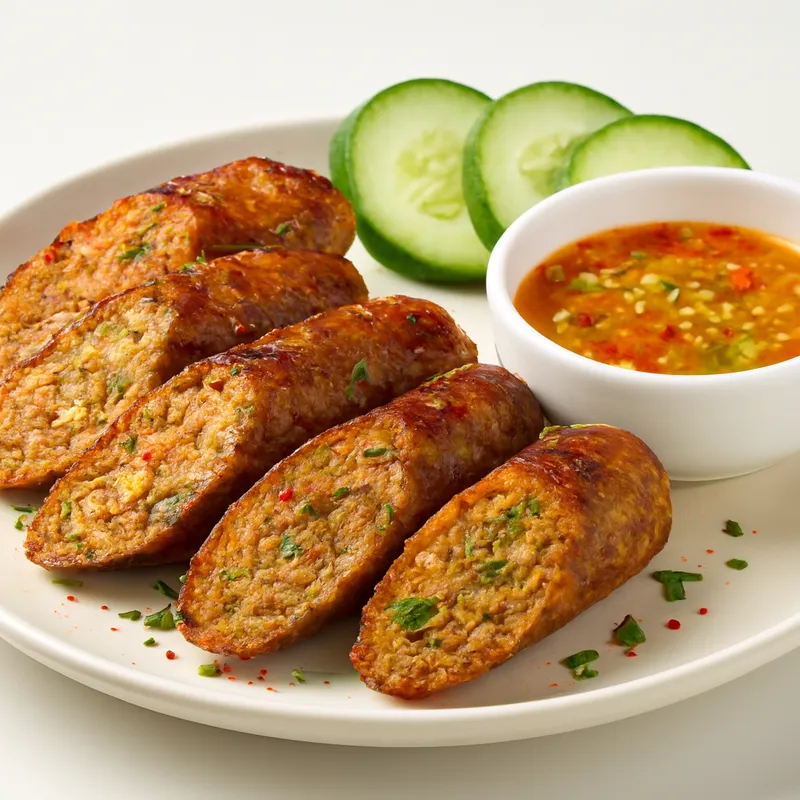
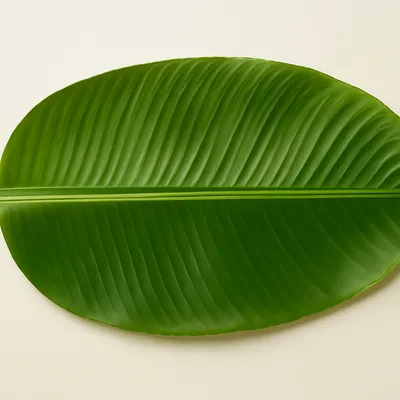
Banana-leaf parcels of fish (or pork) layered with a Lanna paste of galangal, kaffir lime, lemongrass, and chile, grilled over charcoal until the leaf chars and the filling steams in its own juices.
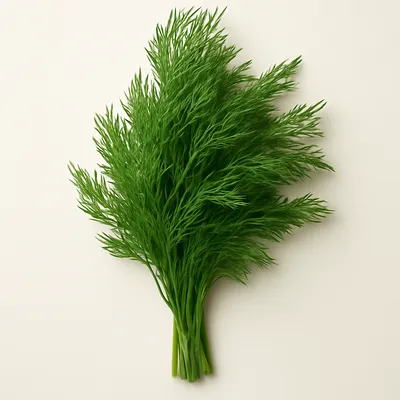
Aeb (sometimes spelled aep or eb) is a Lanna grilling technique applied to many proteins — aeb pla (fish), aeb moo (pork), aeb hed (mushroom). The banana leaf both protects the meat and perfumes it; the technique is older than aluminum foil and is still preferred at village fairs and street stalls in Chiang Mai and Mae Hong Son. The pairing with dill (pak chee, or pak chee lao) is a Lanna marker — central Thai recipes for fish parcels (hor mok pla) use coconut milk and Thai basil instead.
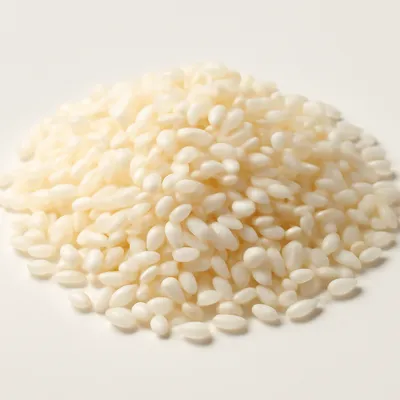
Lanna banana-leaf grilling technique older than aluminum foil. The rice flour in the marinade is the load-bearing trick — it binds the fish juices into a custardy gel instead of a dry-meat-in-puddle result.
Open the leaf and a wave of galangal-lime steam comes up. The fish has steamed inside the parcel into a wet, almost custardy texture — bound by the rice flour into a soft loose patty rather than separate chunks. Flavor is herbal-citrus from the kaffir lime and lemongrass, low-mid heat from dried chile, smoky-bitter from the leaf char on the bottom. The dill is the unusual note — Lanna uses it where central Thai would not. Eat from the leaf, scooping with sticky rice. If the parcel puffed and burst, the heat was too high and the inside steamed dry.
The rice flour in the marinade is the load-bearing trick. Without it, the fish releases water as it heats and the parcel boils internally, producing dry meat in a puddle. Rice flour binds the juices into a custardy gel that stays attached to the fish. Charcoal heat must be moderate, not screaming hot — too much heat and the leaf flares and burns through before the inside cooks; too little and the leaf doesn't release its perfume. The leaf char is intentional flavor, not a mistake.
Variations
Aeb pla (fish), aeb moo (pork), aeb hed (mushroom), aeb kop (frog) — all the same technique; Mae Hong Son villages run heavier on dill; Chiang Mai's Tong Tem Toh serves the canonical fish version.
On the Palate
Where Aeb Pla sits in the Thai flavor cloud
Ingredients
Serves 4





How it's made
6 steps · 25 min active + 10 min waiting
- 110 min
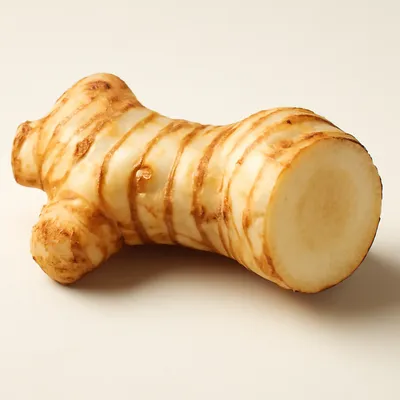
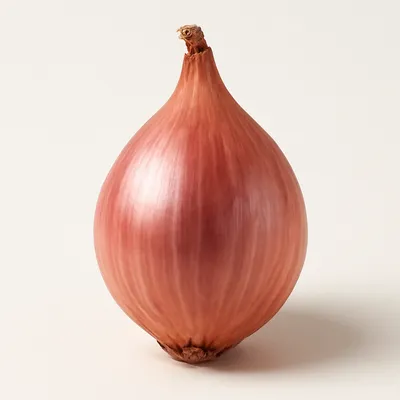
Pound paste: 6 dried red chiles (soaked), 1 inch fresh galangal, 2 stalks lemongrass (white part only, sliced), 6 garlic cloves, 4 shallots, 4 kaffir lime leaves, 1 tsp turmeric, 1 tsp salt, 1 toasted tua nao disc — to a coarse green-yellow paste.
- 212 min
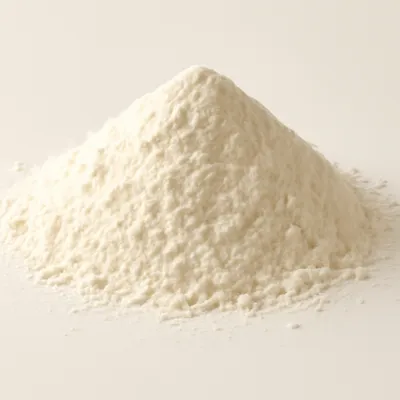
Cut 500g boneless white fish (snakehead, tilapia, or catfish) into 2cm chunks. Mix with paste, 1 tbsp fish sauce, 2 tbsp rice flour (it traps the juices), and a handful of chopped spring onion and dill. Rest 10 minutes.
Watch outDon't skip the rice flour in the marinade — it binds the fish juices into a custardy gel that clings to the meat; without it the parcel boils inside and you get dry fish sitting in a puddle.
- 33 min
Pass banana leaves over an open flame 5 seconds per side — they wilt and become foldable. Cut into 25cm squares; double up two leaves per parcel for strength.
- 45 min
Pile 4 tbsp filling in the centre of each leaf square. Top with a torn kaffir lime leaf and 2 thin slices of fresh galangal. Fold the leaf into a flat envelope; secure with bamboo skewers or toothpicks pushed through both layers.
- 514 min
Grill over medium charcoal 12-15 minutes total, turning every 3 minutes. The leaf will char in patches and the parcel will start to leak a little juice — that's done. If it puffs up like a pillow, you went too hot.
Watch outGrill over moderate charcoal, turning every few minutes — the leaf should char in patches and the parcel just start to weep a little juice; if it puffs up like a pillow, the fire's too hot.
- 61 min
Open the parcels at the table — the steam smells of galangal and lime. Eat from the leaf with sticky rice; the slightly burnt leaf perfume is part of the dish.
Archive tool suggestions — not reviewed
These legacy suggestions have not been evidence-reviewed and are not presented as required tools.
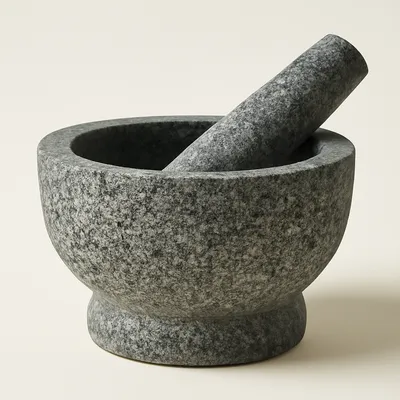
The simplest tool in any kitchen: a heavy bowl and a club to bash things in it. Different cuisines use different stones — Thai cooks pound green papaya in a tall granite mortar (krok hin); pesto Genovese requires the soft-pored Carrara marble; Indian masalas grind down on rough basalt. The bash-don't-cut motion releases volatile oils that a blade keeps sealed in the cell wall.
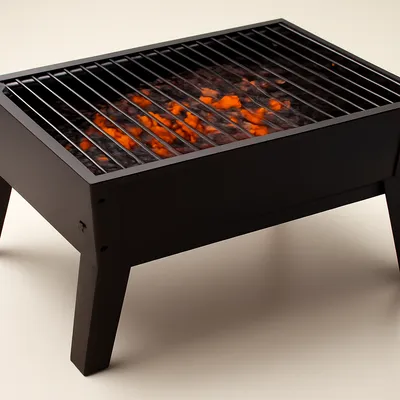
An open or hooded metal frame holding a bed of glowing charcoal embers, with a grate above. Charcoal burns at 700°C+ on the surface and emits short-wave infrared, which cooks proteins faster and with deeper Maillard browning than gas. Hardwood lump charcoal (oak, mesquite, fruitwood) lends its own smoke; cheap briquettes do not. Mastery is mostly heat zoning — direct over coals for searing, indirect off-coals for slow-roasting.