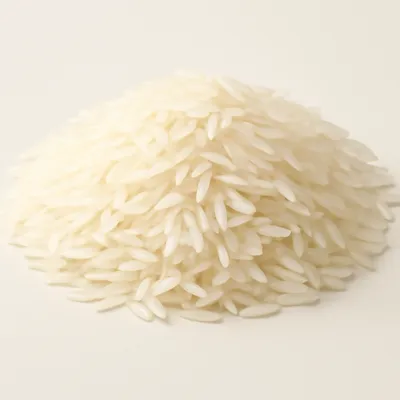





Japanese curry came via the British Royal Navy in the late 19th century — they had adapted Indian curry into a flour-thickened stew suitable for ship galleys, and the Imperial Japanese Navy adopted it in the Meiji era to combat beriberi — championed by navy surgeon Takagi Kanehiro in the 1880s after he observed the British navy had no beriberi; the first official recipe appears in the 1908 Navy Cookbook (Kaigun Kappojutsu Sankosho). Katsu curry as a combination plate is much later: originated in 1948 at the Ginza Swiss (Grill Swiss) Western-style restaurant in Tokyo, when regular customer Shigeru Chiba — an infielder for the Yomiuri Giants — asked the kitchen to lay a pork cutlet directly over the curry rice.
Two yoshoku (Western-style) imports collided — 1899 Tokyo's tonkatsu over British naval curry that Japan adopted from the Royal Navy in the Meiji era. Rice goes in last as a dam.
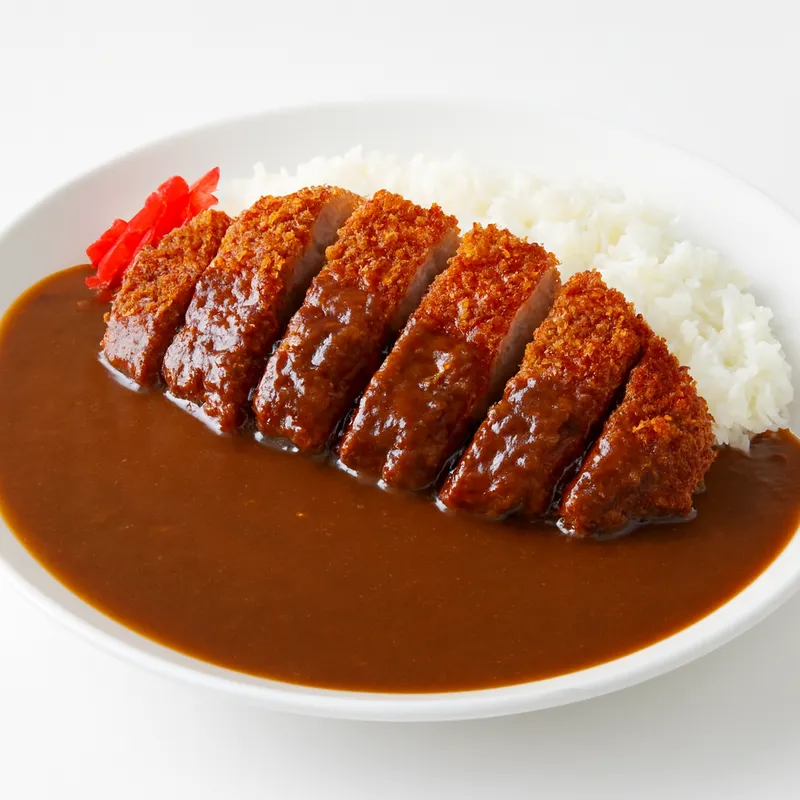
A plate split in two: one side a mound of white rice half-blanketed in thick brown Japanese curry sauce, the other a sliced breaded pork cutlet, golden and crackling. Eat with a spoon — the curry binds rice and katsu in each bite. The crust holds for the first few minutes; once curry soaks in fully, it goes soft and that's the trade-off you accept.
The curry roux is what makes it Japanese, not Indian — flour browned in butter and oil, then bloomed with curry powder, beef stock, apple, honey, sometimes chocolate or coffee. The result is sweeter, thicker, less aromatic than its source. Storebought roux blocks (S&B Golden, House Vermont) actually outperform most home-built versions because of long-fermented spice oils; restaurants almost universally start from a commercial roux.
Variations
Hire-katsu curry (fillet, leaner) vs rosu-katsu curry (loin, fattier); CoCo Ichibanya chain offers spice-level 1-10; Kanazawa-style curry is darker, served on a metal plate with shredded cabbage under the katsu.
- ·Japanese curry plus a panko-crusted deep-fried pork (or chicken) cutlet sliced over the top.
- ·Cutlet stays crisp on rice; sauce is poured around, not on top, so the crust doesn't go soggy.
On the Palate
Where Katsu Curry sits in the Japanese flavor cloud
The curry roux is the whole identity — brown the flour in butter and oil to a nutty tan, then bloom the curry powder in it so the gravy comes out thick, glossy and mellow-sweet; ladle it on only at the last second so the katsu crust stays crisp.
Ingredients





How it's made
5 steps · 30 min
- 15 min
Prepare the pork by dredging it in flour, then dip in beaten egg, and coat thoroughly with breadcrumbs. The coating should be even and thick.
- 28 min
Heat oil in a pan to 350°F (175°C) and carefully lower the pork cutlets into the hot oil. Fry until golden brown and crispy, about 3-4 minutes per side.
Watch outOil at 175℃ — the cutlet should bubble up vigorously the moment it goes in and turn deep golden, not pale or greasy.
- 35 min
In a separate pot, sauté chopped onions, carrots, and potatoes in a little oil until the onions are translucent and the vegetables are starting to soften.
- 410 min
Stir in curry powder and continue to cook until the spices are fragrant, then add water and simmer until the vegetables are tender.
Watch outToast the curry powder in the oil until it smells nutty and fragrant before any water goes in — that bloom is where the aroma comes from.
- 52 min
Slice the fried pork cutlets and serve over steamed rice, ladling the curry sauce generously over the top.
Watch outSlice and sauce at the very end so the crust is still audibly crisp when it hits the plate.
Archive tool suggestions — not reviewed
These legacy suggestions have not been evidence-reviewed and are not presented as required tools.