


Sate lilit is Balinese ceremonial food, traditionally prepared communally by village men before temple festivals — same banjar tradition that produces lawar. Historical accounts place it within the Hindu-Balinese ritual cuisine; commercial restaurant versions emerged in the late 20th century with Bali's tourism boom. Coastal villages favor fish; inland Ubud uses pork or chicken.
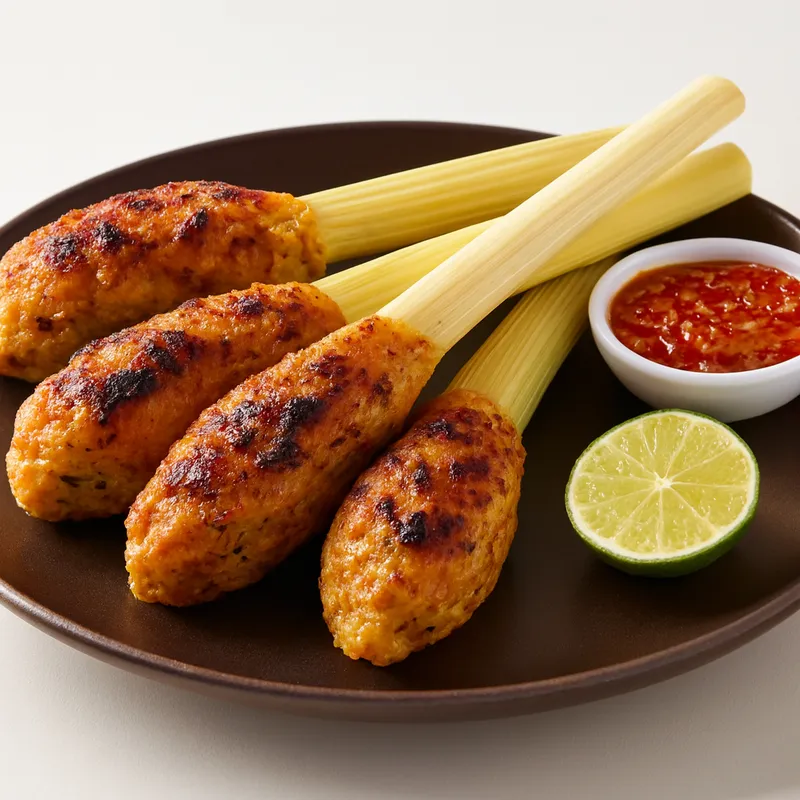
Balinese ceremonial food prepared by the same banjar collective that makes lawar. Lilit means 「to wrap」 — minced fish is molded around a flat lemongrass stalk, not skewered. The stalk's volatile oils release into the meat from inside as it grills; a round bamboo skewer would let the soft mince fall off.
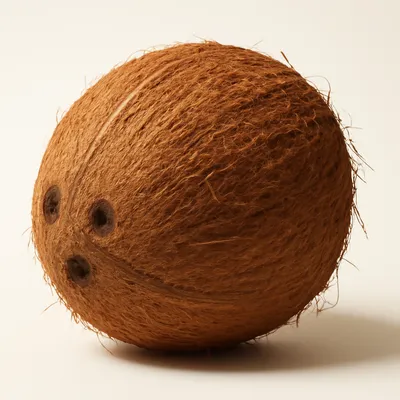
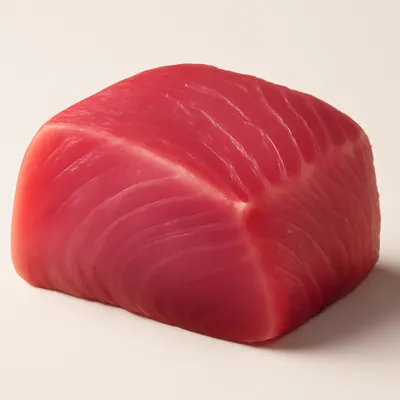
Minced fish (often mackerel or tuna) pounded with grated coconut, base genep paste, and palm sugar, then molded around a flat lemongrass stalk and grilled over coconut husk embers. Unlike skewered sate, the meat is wrapped on (lilit means "to wrap"). The lemongrass stalk perfumes from inside; you eat it whole, biting the meat off the stalk like corn.
Lemongrass-stalk-as-skewer is functional, not decorative: the stalk's volatile oils release into the meat from inside as it grills, while the flat shape gives more contact surface to bind the soft mince. A round bamboo skewer would let the mince fall off. The grated coconut acts as a starch-free binder — its fat melts into the protein instead of squeezing out.
Variations
Coastal Jimbaran and Sanur use mackerel or tuna; inland Ubud uses pork or chicken; Lombok's sate ikan tanjung is the closest non-Bali cousin; commercial versions sometimes substitute bamboo and lose the lemongrass perfume.
On the Palate
Where Sate Lilit sits in the Indonesian flavor cloud
Ingredients








How it's made
6 steps · 1 hour 15 min
- 19 min
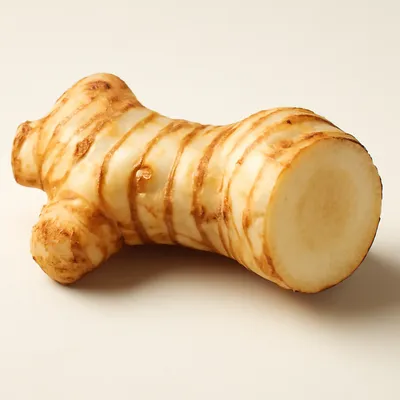
Combine minced fish, grated coconut, turmeric, galangal, garlic, shallot, bird's eye chili, candlenut, and salt in a bowl.
- 29 min
Mix well until the mixture becomes a smooth paste.
Watch outPound or mix until the fish turns sticky and tacky — that stickiness is what grips the lemongrass; a loose, grainy mince slides right off on the grill.
- 314 min
Mold the fish mixture around the thicker end of lemongrass sticks.
Watch outPress the paste firmly around the thick end of the stalk and pack it snug — leave air pockets or a loose grip and it drops into the coals mid-turn.
- 423 min
Grill the skewers over charcoal until the fish is cooked through and lightly charred.
Watch outTurn often over hot charcoal until the outside is springy and edged with char spots — pull it the moment it firms up, overcooked fish paste goes dry and crumbly.
- 56 min
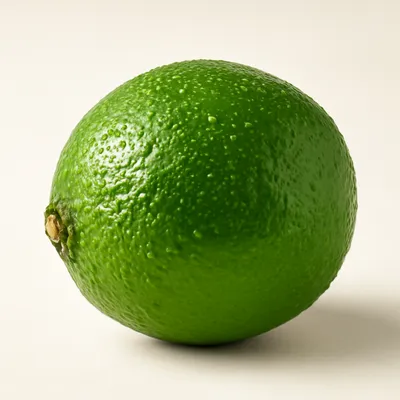
Serve the sate lilit hot with sambal or a squeeze of fresh lime.
- 614 min
Enjoy as a snack or as part of a larger meal.
Archive tool suggestions — not reviewed
These legacy suggestions have not been evidence-reviewed and are not presented as required tools.
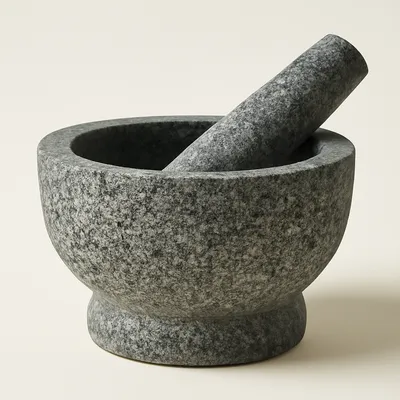
The simplest tool in any kitchen: a heavy bowl and a club to bash things in it. Different cuisines use different stones — Thai cooks pound green papaya in a tall granite mortar (krok hin); pesto Genovese requires the soft-pored Carrara marble; Indian masalas grind down on rough basalt. The bash-don't-cut motion releases volatile oils that a blade keeps sealed in the cell wall.
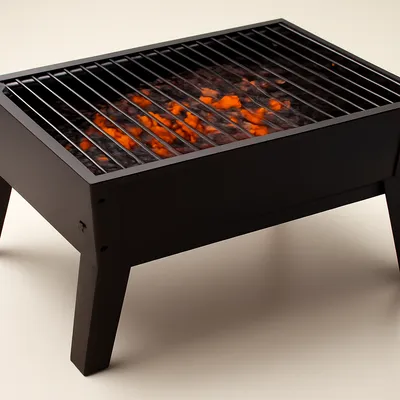
An open or hooded metal frame holding a bed of glowing charcoal embers, with a grate above. Charcoal burns at 700°C+ on the surface and emits short-wave infrared, which cooks proteins faster and with deeper Maillard browning than gas. Hardwood lump charcoal (oak, mesquite, fruitwood) lends its own smoke; cheap briquettes do not. Mastery is mostly heat zoning — direct over coals for searing, indirect off-coals for slow-roasting.