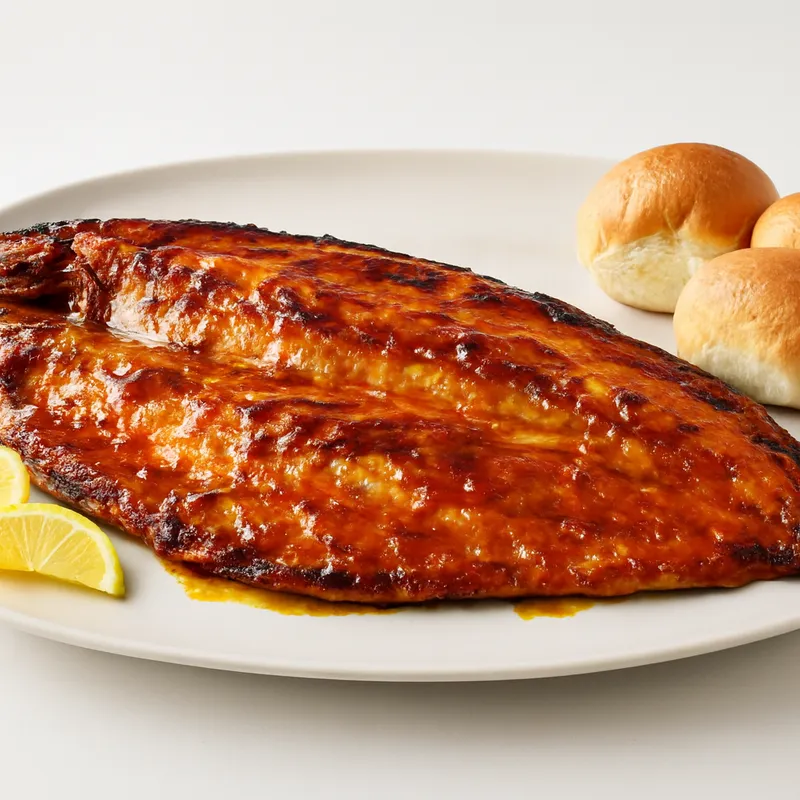
Pickled fish is the dish South Africans associate with Cape Town's Cape Malay community — firm white fish fried, then matured in a turmeric-yellow, curry-spiced sweet-and-sour pickle and eaten cold over Easter. Its link to Good Friday comes from two strands twined together. One is Christian observance: meat is given up on Good Friday in favour of fish, yet fishermen wouldn't put out to sea during Holy Week, so fish was pickled days ahead to keep through the long Easter weekend when cooking paused. The other is Cape Malay craft: from the 17th century the Dutch East India Company shipped Malays, Javanese and Indians from its Asian holdings to the Cape as enslaved and exiled people, and the Muslim women among them — prized for their skill at the stove — folded turmeric, bay and curry into what had been a plain vinegar-and-salt cure, giving the dish its colour and character. Today the two strands meet in one bowl, and it's eaten at Easter across both Christian and Muslim Cape households.
Brought to the Cape by enslaved and exiled Malays, Javanese, and Indians from the 1650s. The Easter timing is practical: Good Friday fell during fishing season, and Cape Malay Muslims couldn't cook on the day, so the fish sat for days in spice-vinegar.
Firm white fish — usually yellowtail or snoek — fried, then submerged in a turmeric-yellow onion pickle thick with curry powder, allspice, bay, and brown vinegar. Eaten cold, two to three days after making, on buttered white bread. The vinegar should be sharp but rounded; if it still bites raw at the back of the throat, it hasn't sat long enough.
The pickle is sweet-sour, not just sour: brown sugar balances the vinegar so the spice can read through. Turmeric is the color and a mild antimicrobial — it's why the fish keeps a week in the fridge without going off. Frying first matters; raw fish in vinegar makes ceviche, not this — you want the maillard crust to hold up against the brine.
Variations
Yellowtail is the Bo-Kaap classic; snoek pickled-fish for the working-class Cape; commercial bottled brands like Cape Point; chef-driven kingklip and yellowtail riffs at restaurants like Wolfgat in Paternoster.
On the Palate
Where Cape Malay Pickled Fish sits in the South African flavor cloud
Fry the fish before it ever meets the pickle: raw fish in vinegar just makes ceviche, but a maillard crust from frying stands up to the brine so the fillets hold their shape through days of steeping in the sweet-sour, turmeric-curry liquor.
Ingredients






How it's made
5 steps · 2 hours
- 12 min
Coat the white fish with salt and set aside.
Watch outSalt the fish and give it a short rest so the surface firms up before frying — that helps the crust set.
- 28 min
Fry sliced onions until translucent.
Watch outCook the onions to soft and translucent, not browned — you want them silky in the pickle, not fried hard.
- 35 min
Add vinegar, sugar, curry powder, turmeric, and spices to the onions.
- 415 min
Simmer the mixture until flavors meld.
Watch outSimmer the pickle gently until the raw edge cooks off the vinegar and the spices smell rounded and deep, then let it cool before it goes over the fish.
- 560 min
Pour over the fish and marinate for at least 24 hours.
Archive tool suggestions — not reviewed
These legacy suggestions have not been evidence-reviewed and are not presented as required tools.