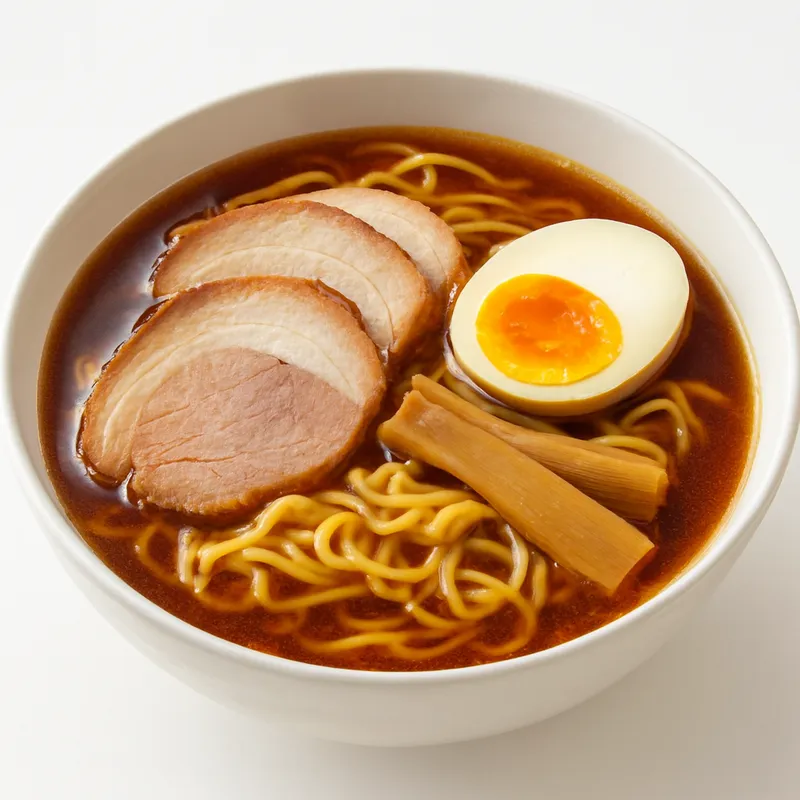
A robust bowl featuring thick wheat noodles in a soy sauce-infused dashi broth, crowned with tender pork, bamboo shoots, and a soft-boiled egg.





Sapporo's ramen district, Tanuki-koji, took shape after WWII, when returning soldiers and demobilized cooks set up street stalls. Shoyu is the oldest of Japan's four ramen styles, and its origin is in Tokyo, not Sapporo: in 1910 Ozaki Kanichi opened Rairaiken in Asakusa, hiring Chinese cooks from Yokohama's Chinatown to serve a light soy-broth 'chuka soba' that is regarded as the ancestor of Tokyo (and Japanese) ramen. Sapporo is in fact famous for MISO ramen (invented at Aji no Sanpei in 1955), not shoyu; within Hokkaido the canonical soy-sauce ramen is Asahikawa's, built on a pork-, chicken- and seafood-based stock.
Older than the famous miso ramen — predates Aji no Sanpei's 1955 miso invention. Traces back to 1920s-30s Chinese-style soba shops in Susukino feeding dock and rail workers. Tare is the trick; the broth itself is relatively neutral, the soy concentrate at the bowl bottom is what defines it.
Curly yellow wheat noodles in a brown soy-tare broth, topped with chashu pork, menma bamboo, scallion, and often a halved soft egg. The broth is chicken or pork-bone-based but lighter than tonkotsu — clear enough to see through, salt-forward rather than fatty. A swirl of lard or sesame oil floats on top to keep heat trapped. Slurp loud; the noodles cool fast.
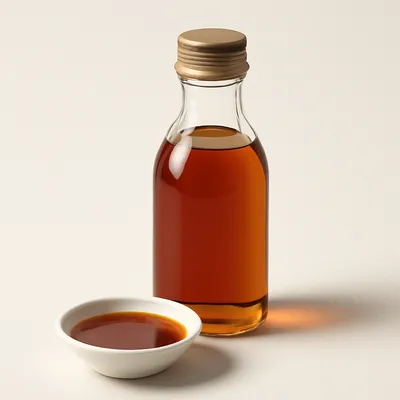
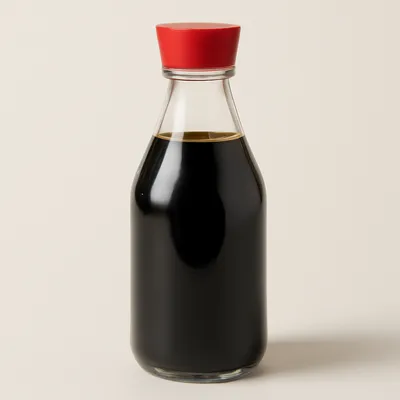
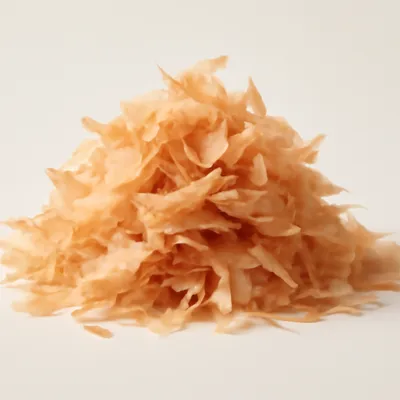
Tare is the trick. The broth itself is relatively neutral — what defines a shoyu ramen is the soy-based seasoning concentrate spooned into the bottom of each bowl before broth is poured in. A good Sapporo shoyu tare blends light and dark soy, mirin, sake, and often dried fish (niboshi or katsuobushi) aged for weeks. Sub the tare for table soy and the bowl tastes flat — the soy needs the umami backing to read as broth.
Variations
Tanuki-koji shops are the postwar lineage; Aji no Sanpei is the miso-ramen founder, not shoyu; Menya Saimi runs the most-cited modern Sapporo shoyu bowl; Hakodate shoyu ramen (Hokkaido cousin) uses a clearer, lighter pork-and-chicken stock.
On the Palate
Where Sapporo Shoyu Ramen sits in the Japanese flavor cloud
Ingredients








How it's made
5 steps · 2 hours
- 138 min
Boil wheat noodles until al dente, then drain and set aside.
Watch outPull the noodles at al dente and drain hard — they keep softening in the hot broth, so a touch firm now is right in the bowl.
- 224 min
Prepare dashi by simmering kombu and bonito flakes, then remove solids.
- 324 min
Add soy sauce to the dashi for a rich broth base.
Watch outThe tare goes in the empty bowl first, then the broth on top — spoon it in and taste; it should read savory-deep, not just salty.
- 424 min
Cook pork slices in the broth until tender.
- 510 min
Serve noodles in a bowl, ladle over the broth, and top with pork, bamboo shoots, green onion, bean sprouts, and a soft-boiled egg.
Archive tool suggestions — not reviewed
These legacy suggestions have not been evidence-reviewed and are not presented as required tools.