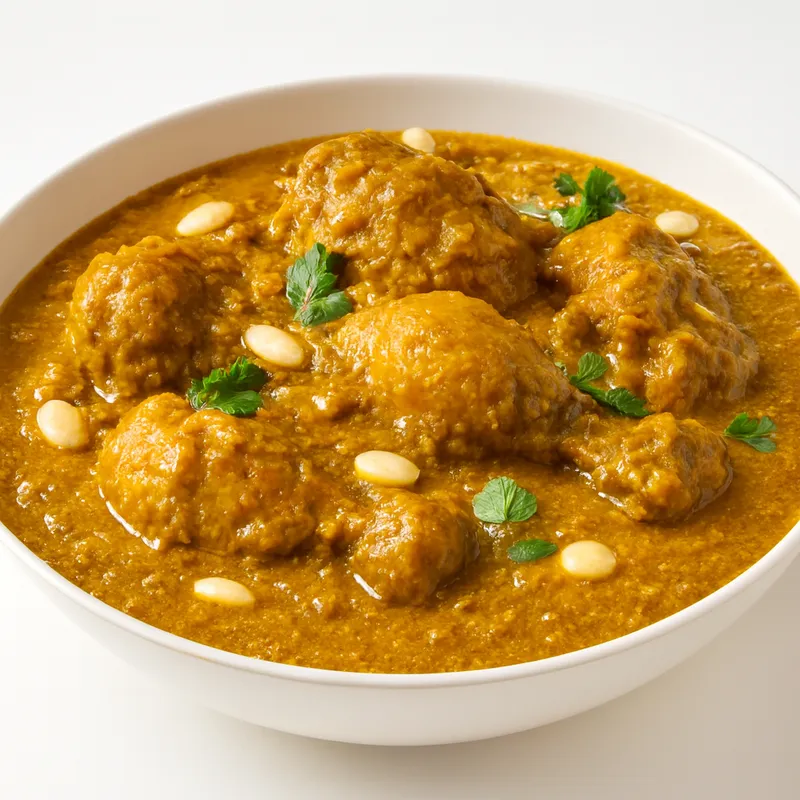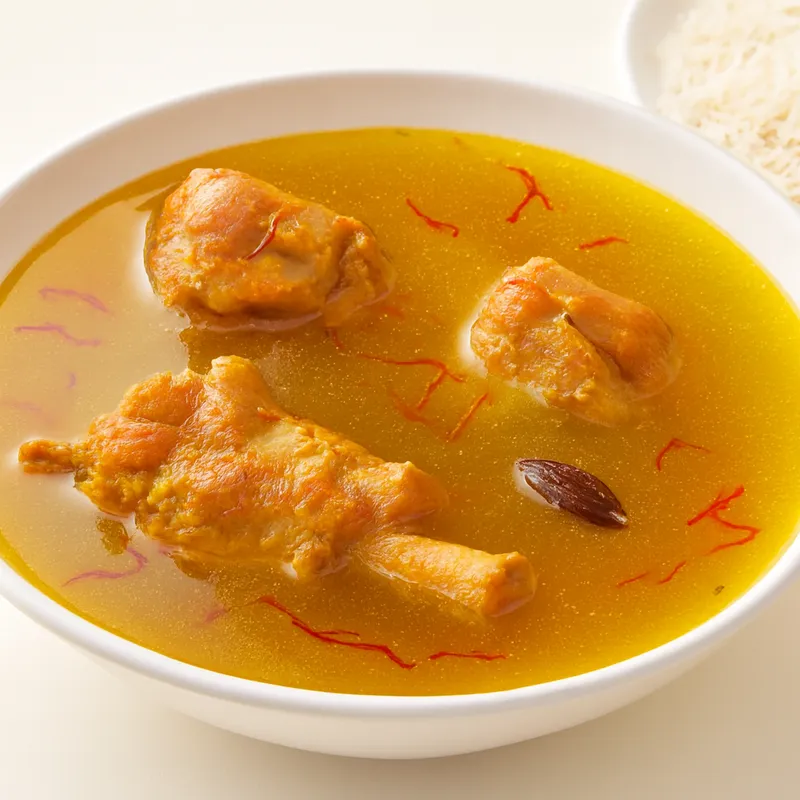

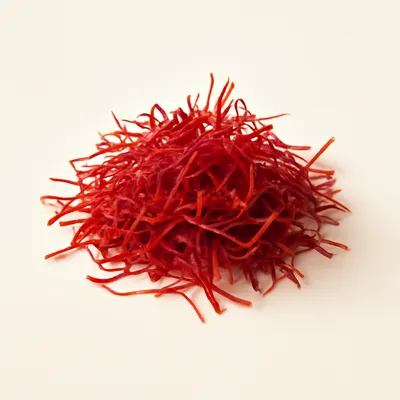


Born in the kitchens of the Asaf Jahi Nizams of Hyderabad in the early 18th century — a fusion of Mughal pulao technique and Telugu/Tamil spice from the Deccan. Two methods exist: kachchi (raw marinated mutton sealed and cooked together with rice from start) and pakki (meat pre-cooked, then layered). Hyderabad's signature is kachchi — riskier, but the meat juices baste the rice from below.
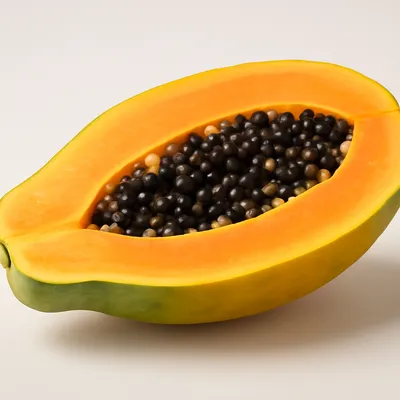
18th-century Asaf Jahi court invention. Kachchi method: raw marinated mutton sealed under rice with dough, dum-cooked 25–40 minutes — papain in the papaya marinade tenderizes while rice finishes.
Long-grain basmati and bone-in mutton come out in distinct layers — never stirred together. Saffron-soaked milk has streaked some grains gold, others stay white; mint and fried onion thread through. Each forkful has rice, a piece of meat, sometimes a whole boiled egg. Eaten with mirchi ka salan and raita; no extra sauce — the rice carries its own moisture.
Dum is the move: dough seals the lid, the pot goes on coals or low flame, and steam circulates inside without escape for 25–40 minutes. The kachchi method depends on yogurt and papaya in the marinade — papain enzymes tenderize the raw mutton in the same window the rice finishes. Open the seal too early and the meat is raw; too late and the rice is mush.
Variations
Kachchi (raw, the Hyderabad signature) vs pakki (pre-cooked); Lucknowi/Awadhi version is gentler-spiced and uses goat; Calcutta biryani drops in a boiled potato and egg.
- ·Kacchi style: raw marinated meat layered directly with parboiled rice, sealed pot, single slow cook.
- ·Sharper spice (Telugu chili heat); hand-pounded saffron and mint give it a brighter green-gold streak.
On the Palate
Where Hyderabadi Biryani sits in the Indian flavor cloud
Nail the dum timing so the mutton and rice finish together: the dough-sealed pot must trap steam long enough for papaya enzymes to tenderize the raw meat exactly as the par-cooked rice turns fluffy — open too early and the meat is raw, too late and the rice is mush.
Ingredients






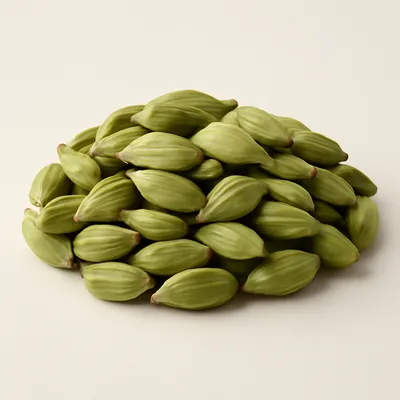
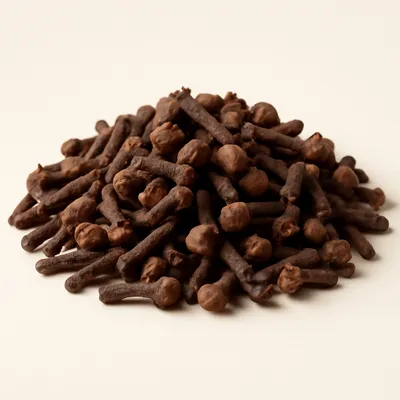





How it's made
5 steps · 4 hours
- 1164 min
Marinate mutton with yogurt, ginger, garlic, and spices for several hours.
- 214 min
Partially cook basmati rice with saffron, bay leaf, and whole spices.
Watch outDrain the rice at 70 percent — the grain should bend but still snap with a hard center; it finishes cooking in the steam.
- 314 min
Layer the marinated mutton and par-cooked rice in a heavy-bottomed pot.
- 441 min
Seal the pot with dough to trap steam and cook on low heat for dum.
Watch outPress the dough band all the way around so no steam leaks; you want the lid to feel sealed and the pot silent.
- 58 min
Break the seal, gently mix, and serve hot garnished with mint and cilantro.
Watch outWait for aroma and a faint crackle from the base before opening; that's the sign the meat is cooked and the rice is set.
Archive tool suggestions — not reviewed
These legacy suggestions have not been evidence-reviewed and are not presented as required tools.