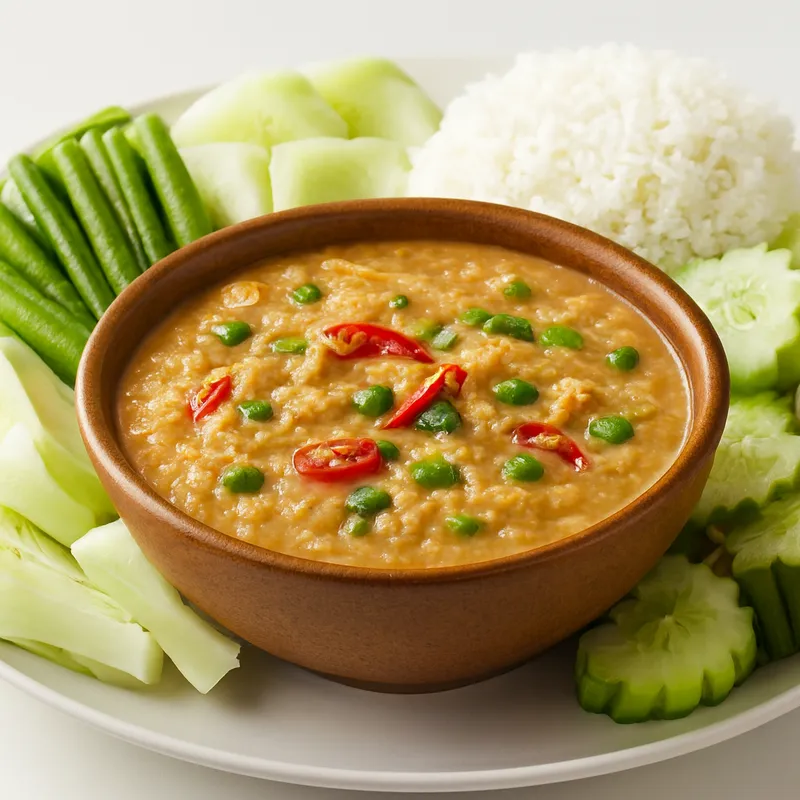
Khmer Krom Mekong-Delta crepe — rice-flour-and-turmeric batter spread thin in a hot pan, filled with shrimp, pork, bean sprouts, and sour fish-mint leaves, folded crispy and wrapped in lettuce with herb dipping sauce.
Banh xeo (literally 'sizzling cake' from the sound the batter makes on the hot pan) is shared between Vietnam and Cambodia's Khmer-Krom community in the Mekong Delta. The Khmer Krom version differs from the Vietnamese mainstream by using more shrimp (less pork), a thicker turmeric-colored batter, and the obligatory inclusion of fish-mint leaves (rau diếp cá / pak chee farang) that locals in the Mekong Delta grow in their backyards. The dish is eaten as wrap-and-dip: pieces of crepe wrapped in lettuce or perilla leaves with herbs, dipped in nuoc cham (fish-sauce-lime-chili).
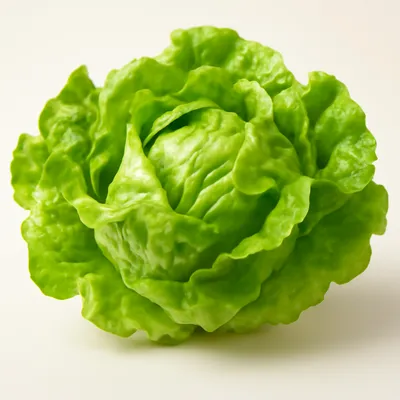
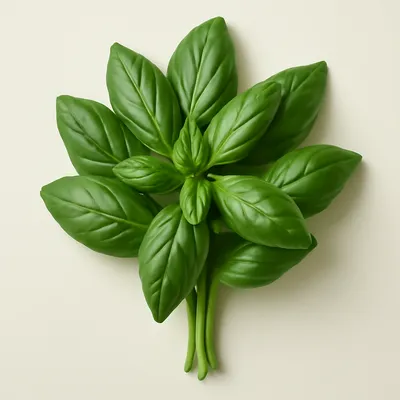
Pick up a piece of crispy folded banh xeo, place inside a lettuce leaf with fresh fish-mint and Thai basil, dip into nuoc cham, eat the whole bundle in one bite: turmeric-yellow crepe shatters on the teeth, shrimp and pork inside warm and savory, bean sprouts crunch fresh, herbs hit cold-green-bright, the dipping sauce ties everything with sweet-sour-salty. The fish-mint specifically gives the dish its Khmer-Krom signature — Vietnamese banh xeo skips it.
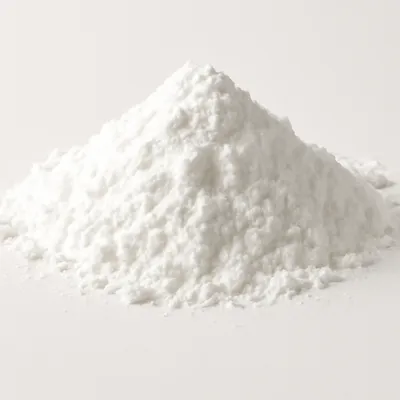
Rice flour and cornstarch together create the dish's signature shattering crispness: rice flour alone is too tender, cornstarch alone too brittle, the combination gels and crisps simultaneously. Turmeric provides color and a slight earthy flavor; coconut milk adds richness and helps the batter cling to the pan. The high-heat single-side cook crisps the bottom while the lid traps steam to cook the filling — without the lid step, the bean sprouts stay raw and the pork undercooks.
Variations
Khmer-Krom original uses fish-mint (rau diếp cá) and emphasizes shrimp; Vietnamese mainstream uses more pork and skips fish-mint; modern Phnom Penh restaurants serve a 'baby banh xeo' (mini-crepes) for tapas-style; coastal Khmer-Krom version adds squid and crab.
On the Palate
Where Banh Xeo Khmer Krom sits in the Cambodian flavor cloud
The lid step is make-or-break — cover the pan after the batter goes in so trapped steam cooks the sprouts and filling while the bottom crisps, then uncover to finish the shatter-crisp base.
Ingredients
Serves 4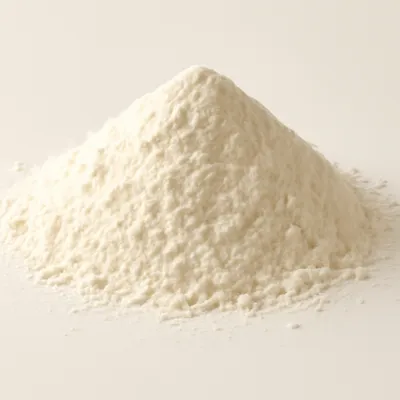












How it's made
5 steps · 45 min active + 30 min waiting
- 133 min
Make batter: in a large bowl, whisk 200g rice flour + 50g cornstarch + 1 tsp ground turmeric + 1 tsp salt + 1 can (400ml) coconut milk + 200ml water + 4 sliced green onions until smooth. Rest 30 min.
Watch outRest the batter a full 30 minutes so the flours hydrate — a rested batter spreads thin and crisps far better than one used straight away.
- 25 min
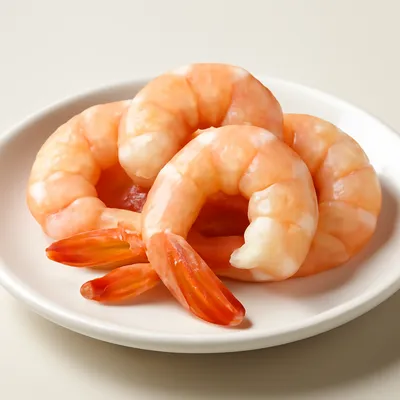
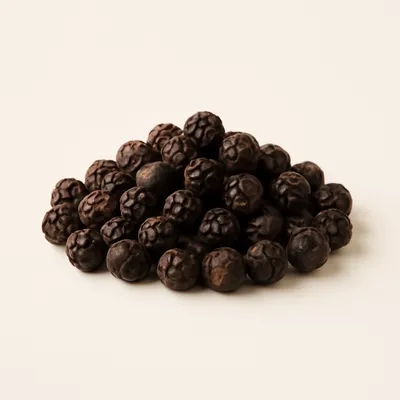
Make filling: clean 300g small shrimp (peeled, deveined) and 200g thin-sliced pork belly. Season each with 1 tsp salt + 1 tsp pepper + 1 tsp ground turmeric.
- 33 min
Heat a non-stick skillet (25cm) over medium-high heat with 1 tbsp vegetable oil. Sear a handful of pork until just cooked, 90 sec; add a handful of shrimp; cook 60 sec more.
- 42 min
Pour 1/4 cup batter over the cooked filling, swirling pan to coat the bottom evenly. Top with handful of bean sprouts. Cover pan 60 sec to steam-cook the sprouts.
Watch outSwirl the pan the instant the batter lands so it coats the bottom in one thin even layer before it starts to set.
- 54 min
Uncover; cook 90 sec more, drizzling 1 tsp oil around the edges to crisp them. The crepe should be golden-crispy on the bottom. Fold in half over the filling like an omelet; slide onto a plate. Serve with lettuce leaves, fresh fish-mint, Thai basil, mint, perilla, and a small bowl of nuoc cham (60ml fish sauce + 60ml water + 2 tbsp lime juice + 1 tbsp sugar + 2 minced bird's-eye chilies + 2 minced garlic cloves). Wrap crepe pieces in lettuce with herbs, dip, eat.
Watch outThe base is ready to fold when it's evenly golden and audibly crisp at the edge — that's the sizzle the dish is named for.
Archive tool suggestions — not reviewed
These legacy suggestions have not been evidence-reviewed and are not presented as required tools.
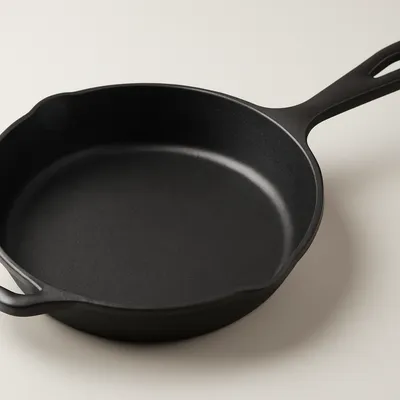
A heavy, single-piece cast iron pan, 25-30 cm across, weighing 1.5-2.5 kg. Once preheated, the thick mass holds 230°C+ even when a cold steak hits the surface — that's the secret to a deep crust. A well-seasoned skillet (multiple thin layers of polymerized oil baked into the iron) is essentially nonstick, gets better with use, and lasts a century. Lodge skillets from Tennessee have been in continuous production since 1896.

Hand-held wire loop tool for beating eggs, whipping cream, emulsifying dressings, and incorporating air into batters. Balloon whisks (large round head) for whipping cream and meringues; French whisks (narrow tear-drop) for sauces in pots; flat whisks (gravy) for pan sauces. Stainless steel is universal; silicone-coated for non-stick pans.