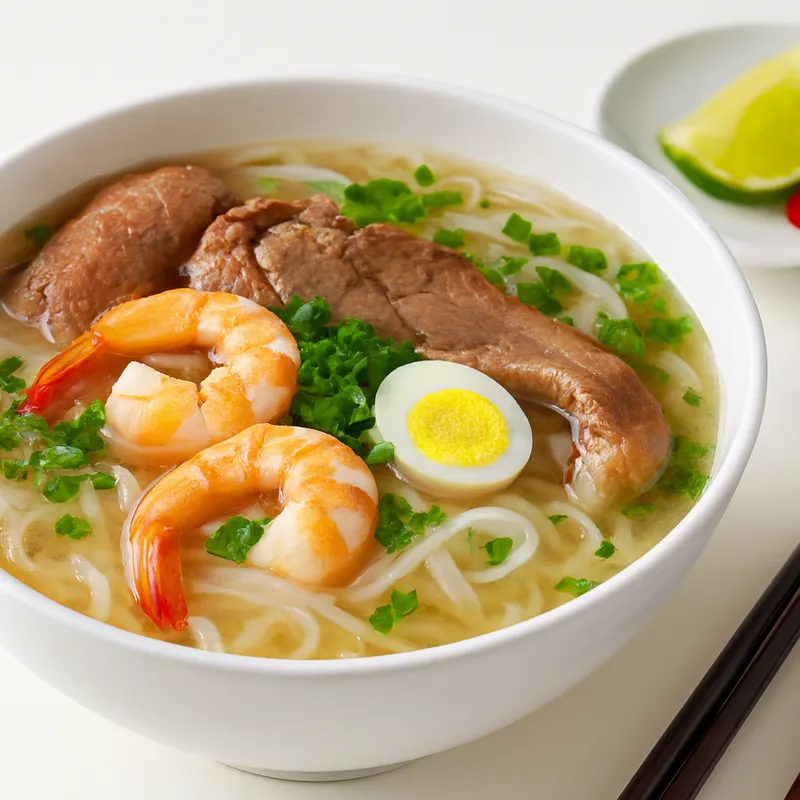
Nha Trang-style grilled pork sausages on bamboo skewers — pork pounded with garlic and sugar to a springy paste, charred over coals, eaten wrapped in rice paper with herbs and a fermented-soybean (tuong) dip.
Nem nuong has multiple regional readings — the Nha Trang version (Khanh Hoa province, central-south coast) is the most exported, characterized by the bouncy, almost rubbery snap and the tuong-based dip, served as part of an elaborate seven-component wrap platter. Nem nuong actually originated in Ninh Hoa, a district about 30 km inland from Nha Trang; the older Ninh Hoa style shapes the meat into flatter patties wrapped on the spot. The dish travelled with the post-1975 Vietnamese diaspora; many Vietnamese-American restaurants in California still trace their nem nuong recipe to a single Nha Trang lineage.
Nha Trang (Khanh Hoa) grilled pork sausage — the snap is myosin cross-linking, only forms if pork stays below 12°C while pounded. Throwing aligns the protein strands. Cooked sticky rice in the tuong dip is what gives the sauce its body.
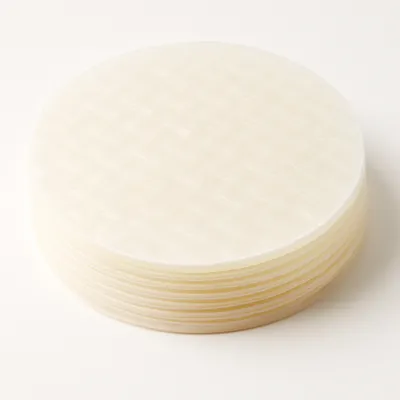
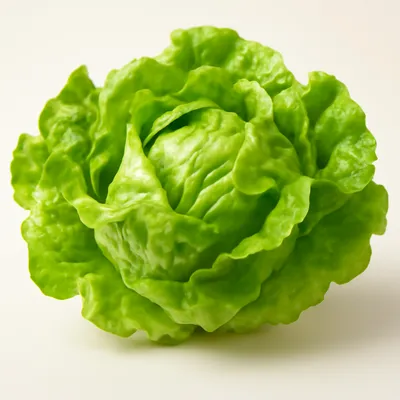
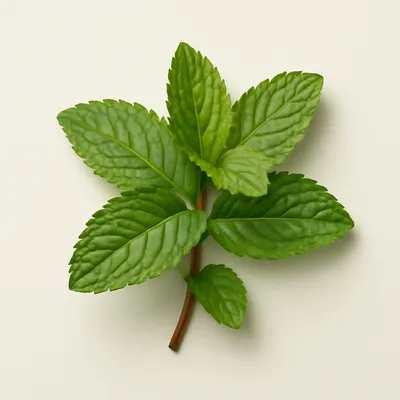
Each sausage is barrel-shaped, cross-hatched with grill marks, with a snap that pops on the first bite — the texture is closer to a Cantonese pork ball than to Western sausage. Sweet, garlicky, lightly smoked. Slide off the skewer onto rice paper with a leaf of lettuce, a sprig of mint, a slice of pickled daikon and unripe banana, and roll. Dunk one end into tuong — the sauce is thick and savoury-sweet, built on pork liver, peanuts, fermented soybeans and sticky rice rather than the bright tang of fish-sauce dips. Nha Trang's version is stiffer and pinker than Saigon's looser interpretation.
The 「snap」 texture comes from myosin cross-linking, which only forms if the meat is kept under 12°C while it's pounded — warm pork goes mushy. The throwing step physically aligns the protein strands; this is the same mechanism behind Cantonese fish balls and Hong Kong beef balls. Baking powder raises pH, which exaggerates the cross-linking. Adding cooked sticky rice to the tuong is what gives the dip its body — without it the sauce is thin.
Variations
Nha Trang version is firmer, pinker, served with thick tuong; Ninh Hoa shapes flatter patties wrapped in rice paper on the spot; Saigon interpretation is looser-textured; California Vietnamese restaurants like Brodard (Garden Grove) trace their recipe to a single Nha Trang lineage.
On the Palate
Where Nem Nuong sits in the Vietnamese flavor cloud
Ingredients
Serves 4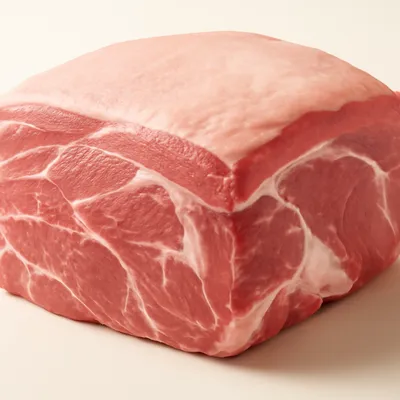








How it's made
5 steps · 35 min active + 55 min waiting
- 112 min
Cube 600g cold pork shoulder (with about 25% fat) and freeze 30 minutes until edges are stiff. Pulse cold in a food processor with 4 minced garlic cloves, 2 tbsp sugar, 1 tbsp nuoc mam (fish sauce), 1 tsp salt, 1 tsp baking powder, 1 tsp ground black pepper, 2 tsp toasted rice powder until a tacky paste forms — keep the bowl chilled.
Watch outKeep the pork and the bowl under 12°C the whole grind — pulse cold and stop at a tacky paste; if it warms up the protein won't cross-link and the sausage goes mushy instead of snappy.
- 235 min
Throw the paste against the bowl 20-30 times to develop bounce — it should snap back when pressed. Chill 30 minutes more.
Watch outThrow the paste at the bowl until it snaps back when you press it — that spring is the myosin aligning; a paste that stays dent-dead won't hold the bite.
- 312 min
Soak 12 bamboo skewers 20 minutes. Wet hands; mould 50g paste around each skewer into a 10cm sausage with rounded ends. Brush with oil.
- 412 min
Grill over hot charcoal (or 230°C grill pan) 10-12 minutes, rotating every 2 minutes. The surface should char in tiger-stripes; meat should feel firm-bouncy at the centre — internal 70°C.
Watch outGrill hot and turn every couple minutes until tiger-stripe char shows and the center feels firm-bouncy — 70°C inside; slack and pale means it's still raw at the core.
- 510 min
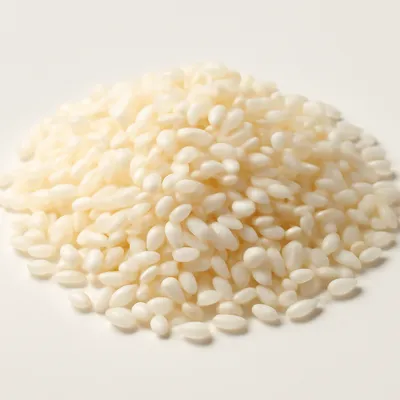
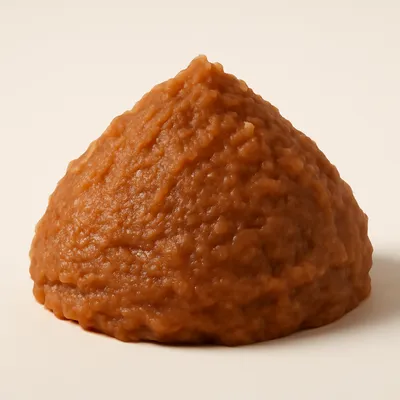
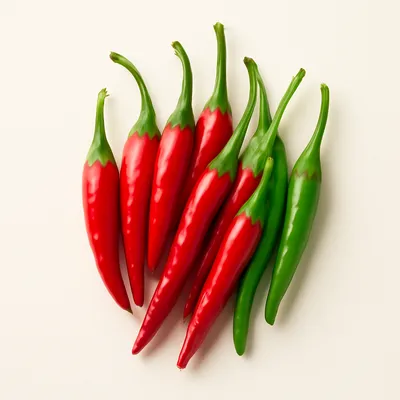
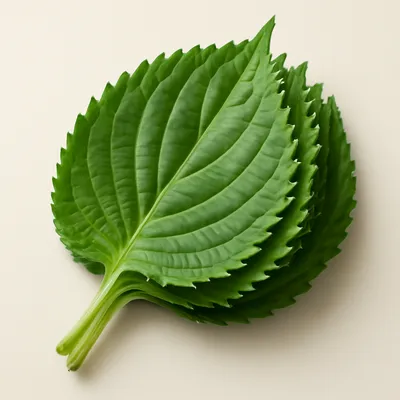
Make the tuong dip: blend 100g cooked sticky rice with 60g fermented soybean paste (tuong ban), 30g coconut milk, 30g pork liver paté, 1 minced garlic clove, 1 tsp chile, 1 tbsp sugar, 100ml water; simmer 5 minutes to a thick brown sauce. Serve sausages with rice paper, lettuce, mint, perilla, garlic chives, pickled carrot-daikon, sliced cucumber, green starfruit, unripe banana, and the dip.
Watch outSimmer the tuong until it thickens to a spoon-coating brown — the sticky rice is what gives it body; too thin and the dip slides right off.
Archive tool suggestions — not reviewed
These legacy suggestions have not been evidence-reviewed and are not presented as required tools.
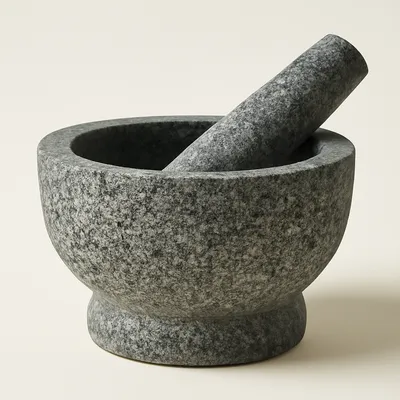
The simplest tool in any kitchen: a heavy bowl and a club to bash things in it. Different cuisines use different stones — Thai cooks pound green papaya in a tall granite mortar (krok hin); pesto Genovese requires the soft-pored Carrara marble; Indian masalas grind down on rough basalt. The bash-don't-cut motion releases volatile oils that a blade keeps sealed in the cell wall.
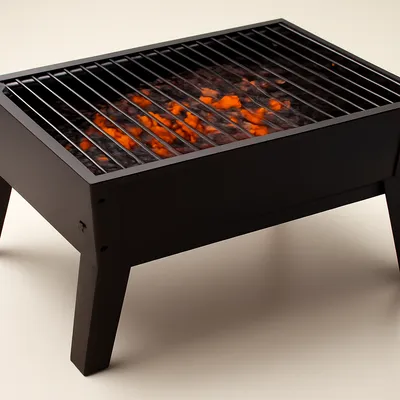
An open or hooded metal frame holding a bed of glowing charcoal embers, with a grate above. Charcoal burns at 700°C+ on the surface and emits short-wave infrared, which cooks proteins faster and with deeper Maillard browning than gas. Hardwood lump charcoal (oak, mesquite, fruitwood) lends its own smoke; cheap briquettes do not. Mastery is mostly heat zoning — direct over coals for searing, indirect off-coals for slow-roasting.